Blog
Large and Small
Posted on 2/7/2019 10:34:38 PM
By Donald Fox
Comment on this
Topics: Appreciating Art | Art and Culture | Art and Psychology | Art History | Creative Process | Learning about Art | Life Experience | Metaphor | Philosophy | Sculpture | Thoughts on Art
Two of the greatest Renaissance sculptures were created by the same artist, Benvenuto Cellini. Perhaps less famous (if fame is any gage) than Michelangelo’s David, Cellini’s Perseus with the Head of Medusa in my opinion rivals any sculptural work done before or after. The over-life size figure of the mythical hero is cast in bronze, a medium used mainly for portrait busts and outdoor commemorative monuments. What is interesting about this and the second Cellini piece is their dramatic difference in scale.
Cellini was trained as a metal worker and had created many medals, clasps, and other ornamental pieces, mostly in gold, for a range of wealthy and influential clients including the Pope. Unfortunately, many of these no longer exist having been melted down for their precious metal. In 1543, though, he completed a salt cellar for Francis I of France. Often reproduced in art history books, this roughly ten-inch-tall by thirteen-inch-long sculpted work in ivory, gold, and enamel has monumental impact especially if seen with no context for comparative scale. The exquisitely detailed reclining figures of Neptune on one side and Terra (Earth goddess) on the other can easily be read as life-size figures. Close to Terra is a miniature building atop which is another female nude figure about one-fifth the size of Terra. This much smaller figure teases a viewer’s brain to interpret the god figures as life size. This small sculpture intended to occupy an ornate dinner table belies its diminutive scale with monumental presence.
The Perseus sculpture, though not as large as Michelangelo’s David, is equally as powerful a portrayal of the idealized human figure, this one having just completed beheading the hideous creature Medusa. The statue is placed in the Loggia dei Lanzi of the Piazza della Signoria in Florence. It directly faces Michelangelo’s sculpture and Perseus raises the severed head of Medusa almost like a challenge to the marble figure of David as if Medusa’s one final curse turned the shepherd boy to stone.
Scale in art has been important for centuries as many pieces, sculptures and paintings, were created to adorn architectural spaces. Twentieth century artists often used large scale to make large statements expressing the idea that large size equates to more powerful work. There have been exceptions, of course (Joseph Cornell’s intimate box sculptures come readily to mind as well as the small-scale Homage to the Square series of Joseph Albers), but most emphasis in much modern painting has pushed way beyond easel painting. An artistic challenge still worth taking on is making a small piece seem monumental like Cellini did with the salt cellar. The perspective of the viewer is an important part of this process for it is in the viewer’s experience that scale, large or small, takes on experiential meaning. A seventeenth century Dutch easel painting of a cathedral interior, for example, can stimulate a viewer’s imagination to the vast expanse of such an interior.
In this day and age when images are often reduced to smaller and smaller screens, it is important that we exercise perception of both large and small to not lose ourselves in a convoluted world of diminutive thoughts and ideas.
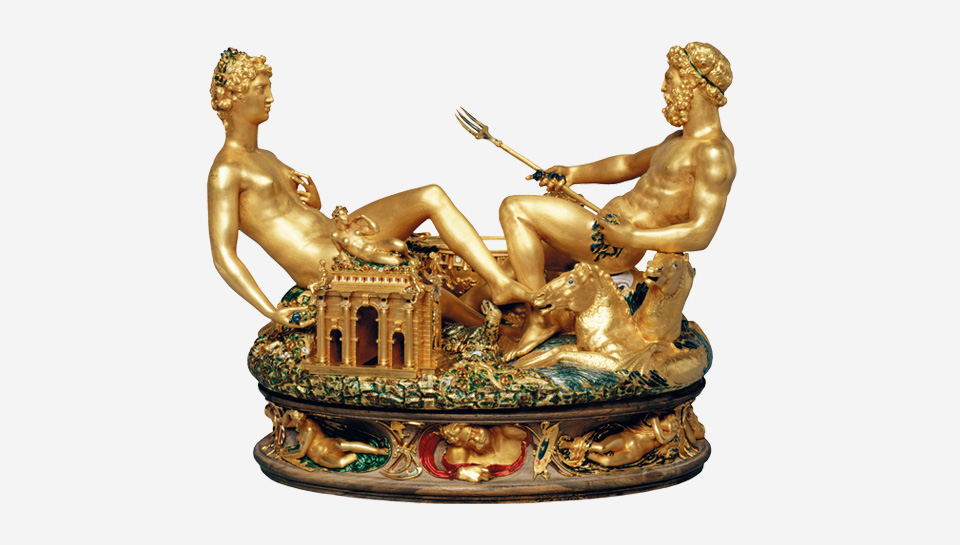
Benvenuto Cellini Salt Cellar 1543

Leave a Comment